
9 min Read

The Crucial Role of Mobile Responsiveness in Healthcare Web Design

9 min Read

The Crucial Role of Mobile Responsiveness in Healthcare Web Design

The Crucial Role of Mobile Responsiveness in Healthcare Web Design

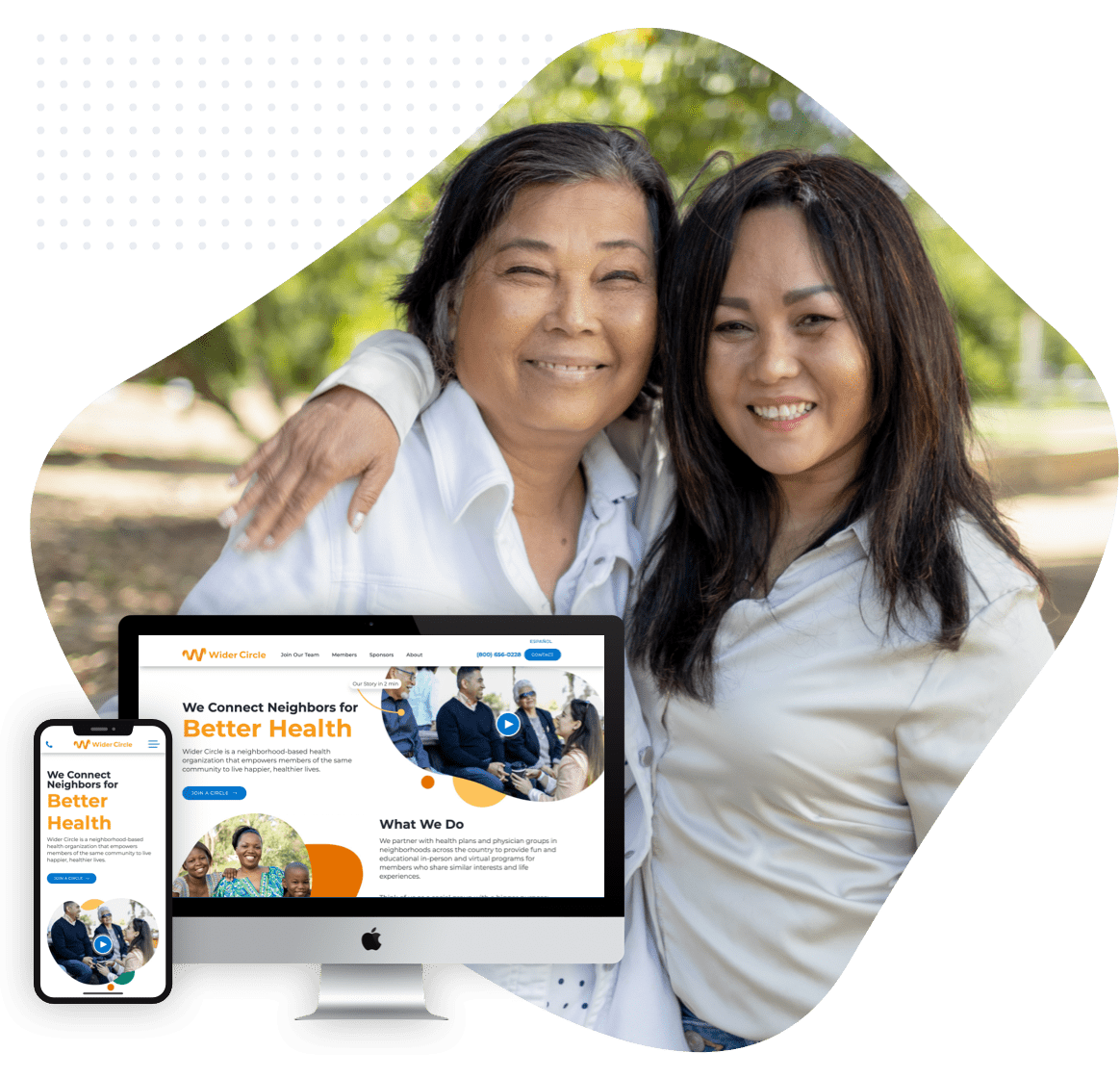
The growing reliance on smartphones has made mobile responsiveness an essential aspect of modern healthcare websites. As people increasingly turn to their phones for medical information, appointment bookings, and other digital health services, a mobile-friendly site is no longer optional. It not only enhances user satisfaction but also fosters trust in an industry where credibility is paramount.

Stanford University found that 46.1% of users judge an organization’s credibility based on website design alone. In healthcare, where trust is crucial, an intuitive, mobile-responsive site can determine whether users stay or leave. By optimizing for smaller screens and fast loading times, healthcare providers can greatly improve patient engagement and overall satisfaction.

Benefits of Mobile-Responsive Design for Healthcare Providers

Improved Patient Experience

With 85% of U.S. adults owning a smartphone, patients frequently consult mobile devices for health information. According to MobiHealthNews, 80% of patients rely on mobile platforms to research medical topics. A mobile-responsive website eases navigation, encourages longer visits, and can boost appointment bookings, key to meeting patient needs. In fact, Healthcare Dive reports that 42% of patients prefer to book appointments online.

Enhanced Accessibility

Mobile responsiveness also promotes inclusivity by making features like appointment scheduling and patient education easy to use. This approach caters to the diverse needs of different patient demographics, allowing everyone to benefit from streamlined interactions on the go.

Cost-Effectiveness

A single responsive website adapts to all screen sizes, eliminating the need for separate desktop and mobile versions. This reduces development expenses and simplifies ongoing maintenance. By consolidating resources and minimizing duplication, healthcare providers can reallocate budgets toward patient care and other strategic goals.

The Importance of Mobile Responsiveness in Modern Healthcare Websites

Search engines prioritize mobile-friendly sites in their rankings, increasing visibility and patient engagement. A user-friendly mobile layout also prevents high bounce rates, as visitors can quickly find what they need. Even a one-second delay in loading time can significantly reduce conversion rates.

Beyond usability, mobile-optimized platforms allow healthcare providers to integrate helpful features like live chat and virtual consultations. These options enable real-time communication, making healthcare more accessible for individuals unable to attend in-person visits.

Finally, a single responsive site is easier and less costly to maintain than multiple versions, aiding compliance with the Americans with Disabilities Act (ADA). This ensures the digital experience accommodates users with different needs, including those with disabilities.

Responsive Design Facilitates Patient Interaction

In a fast-paced healthcare environment, responsive design lays the foundation for effective patient interaction. It ensures that individuals can seamlessly:

  • Book Appointments: A well-structured site steers users to booking forms quickly.
  • Access Telemedicine: Video consultations and remote patient monitoring tools become more accessible on any device.
  • Find Key Resources: Patients can rapidly locate important health information or FAQs without scrolling through complex layouts.

By accommodating various screen sizes, responsive websites load faster and present content in an intuitive manner, two factors that Google values for search rankings.

Impact of Mobile-Friendliness on User Engagement

Time Spent on Site

A Statista study in 2023 revealed that 61% of all web traffic now comes from mobile devices. When a healthcare website is responsive, users find it easier to explore multiple pages and stay longer. Faster loading times encourage patients to browse services, read educational articles, and engage with online tools.

Higher Conversion Rates

User-friendly sites also lead to higher conversion rates, such as booked appointments or newsletter sign-ups. Slow-loading and hard-to-navigate websites push visitors away. However, investing in responsive design addresses these issues, streamlining the user journey and boosting overall engagement and conversions.

Cost Benefits and Simplified Maintenance of Responsive Designs

Adopting a responsive approach saves both time and money by unifying content under one website:

  • Single Codebase: You only need to update one platform, reducing overhead and preventing inconsistencies.
  • Easier Content Management: Healthcare providers can quickly post updated policies, service information, and articles.
  • Consolidated Analytics: Tools like Google Analytics provide coherent data about user behavior across all devices, making insights clearer.

These efficiencies let healthcare teams channel more energy into patient care while maintaining a strong digital presence.

Impact of Responsive Design on Brand Credibility and Trust

Consistency Across Devices

Maintaining a coherent look and user experience across desktops, tablets, and smartphones demonstrates a commitment to professionalism. Studies show mobile-friendly sites often benefit from up to 50% better search visibility and 50% more user engagement. Consistency reassures patients that the healthcare provider invests in quality, enhancing loyalty.

Professional Appearance

A sleek, responsive design underscores a practice’s dedication to delivering a modern, patient-focused experience. From intuitive menu structures to interactive online booking, the features of a mobile-friendly site all contribute to a sense of reliability.

Responsive Design as a Long-Term Investment

The healthcare landscape continues to evolve, with over 60% of website visits coming from mobile devices. By prioritizing mobile optimisation, healthcare providers can remain relevant amid changing technologies and preferences.

Key Benefits:

1. Sustained Engagement: A smooth online experience keeps patients connected to services.

2. Reduced Bounce Rates: Mobile users prefer quick, accessible sites.

3. Higher Search Rankings: Responsive design minimizes duplicate content, improving SEO.

This forward-thinking approach ensures that a healthcare website will adapt to both current and future requirements, maintaining its effectiveness in a dynamic digital healthcare market.

Conclusion

In an era where more than 50% of patient interactions and appointments occur via mobile devices, mobile responsiveness has become essential for modern healthcare.

A site optimized for different screen sizes simplifies navigation, speeds communication, and supports a superior patient experience, ultimately reflecting the high-quality services on offer.

In fact, poor communication can account for over 50% of patient safety issues, and research indicates that 92% of orthopedic teams prefer mobile tools over traditional systems.

Meanwhile, 60% of appointments are now booked via mobile devices, and a mere one-second delay in loading can have a significant impact on user retention.

From enhanced SEO to simplified maintenance and stronger brand credibility, mobile responsiveness paves the way for healthcare providers to thrive in the fast-evolving digital landscape.

By prioritizing responsive design today, organizations set themselves up for continued success and resilience in tomorrow’s healthcare ecosystem.

FAQ

What are common mistakes in writing a web design RFP?2026-04-13T23:29:08+00:00

The most common mistakes are being too vague about what you want, not including a budget range, setting unrealistic timelines, sending to too many agencies (making evaluation overwhelming), using the RFP just to price shop, not explaining how you’ll evaluate proposals, and forgetting to mention required integrations with other business systems.

Do I need a web design RFP if I already have an agency in mind?2026-04-13T23:28:09+00:00

Even if you have a preferred agency, an RFP can be useful. It forces you to clarify your goals and requirements internally. Sending it to 2-3 other qualified agencies gives you a benchmark for pricing and shows you what else is possible. It also demonstrates due diligence to stakeholders or leadership who need to approve the project.

Where can I download a free request for proposal template for web design?2026-04-13T23:27:26+00:00

Sayenko Design offers a free website design request for proposal template that includes all the sections covered in this guide, with sample language and real examples. The template is a customizable Word document that works for any website platform or project type. You can download it and have your RFP ready to send within an hour.

What is a web design RFP?2026-04-13T23:24:19+00:00

A web design RFP is a formal document that introduces your company, describes your project, and asks agencies to submit a proposal for how they would handle it. It’s a professional way to gather information from multiple vendors so you can compare approaches, experience, and pricing fairly.

How do I know if an AI-designed website is good?2026-04-08T22:43:05+00:00

Look at whether it converts. Does it answer visitor questions? Can they find what they’re looking for? Is it fast? Does it rank in search results? These metrics matter more than whether it was designed by AI or a human. A slow, confusing website built by AI is worse than a fast, clear website built by anyone. A great website uses whatever tools work – human or artificial.

Should I upgrade my current website to use AI?2026-04-08T22:42:05+00:00

Not necessarily. Adding AI features makes sense if you’re already planning a redesign or if there’s a specific problem you’re trying to solve (like low conversion rates or SEO performance). Don’t upgrade just for the sake of using AI. Focus on whether new features will actually impact your business goals.

What AI web design tools should I know about?2026-04-08T22:37:34+00:00

For professionals: Figma, Webflow, Framer, and plugins in WordPress are where most of the AI innovation is happening. For DIYers: Wix, Squarespace, and Weebly all have AI builders now. For SEO and content: ChatGPT, Jasper, and specialized AI SEO tools. For analytics and optimization: Google Analytics, Semrush, and conversion rate optimization platforms with AI features.

Will AI web design make websites look the same?2026-04-08T22:29:53+00:00

Early AI tools had that problem. Modern AI is much better at generating variations and working with custom inputs. When a human designer is involved (which they should be), they customize the AI suggestions to make something unique. The problem isn’t AI-generated sameness. The problem is using AI without human direction.

How much faster can AI make the web design process?2026-04-08T22:29:10+00:00

It depends on the project. AI can cut design time by 20-40% and content creation time by 30-50%. Where you see the biggest savings is in repetitive tasks like basic copywriting, initial layout concepts, and technical SEO optimization. Strategic work – understanding your business, defining your positioning, deciding what actually matters to your customers still takes time.

Can I build a good website using AI website builders in 2026?2026-04-08T22:27:50+00:00

You can build a functional website, yes. Whether it’s “good” depends on your goals. If you just need an online presence, AI builders work fine. If you need your website to generate leads and compete with other businesses in your space, a professional designer will outperform an AI builder every time.

Is AI web design going to replace professional designers?2026-04-08T22:27:03+00:00

Not entirely. AI is great at speed, optimization, and handling repetitive work. But strategy, creativity, and business understanding are still human skills. The best websites are built by designers who use AI as a tool, not a replacement. Professional designers are actually becoming more valuable because they know how to use AI strategically.

How many agencies should I send a web design RFP to?2026-04-03T21:41:20+00:00

Three to five agencies is the sweet spot for most projects. Fewer than three limits your ability to compare approaches and pricing. More than five becomes difficult to manage — evaluating six or more detailed proposals is time-consuming, and agencies sometimes deprioritize RFPs sent to large distribution lists because the odds of winning are lower.

How do I evaluate responses to a website design RFP?2026-04-13T23:30:48+00:00

Evaluate RFP responses on four main criteria: relevant experience (have they built similar sites?), process and communication (how do they run projects?), technical fit (do they work with your preferred platform?), and proposal quality (did they read your RFP and respond to what you actually asked?). Create a simple scoring rubric, score each vendor on each criteria, and you’ll have a clear picture. Price should be a factor, but vendors who respond thoughtfully to your specific requirements are almost always better partners than the lowest bidder.

What is a request for proposal template?2026-04-03T21:40:12+00:00

A request for proposal (RFP) template is a pre-formatted document structure you can adapt for your specific project. A good website RFP template includes standard sections — company overview, project goals, technical requirements, timeline, and budget — so you don’t have to start from scratch. The downloadable template on this page covers all major sections for a website design or development project.

How long should a website RFP be?2026-04-03T21:38:07+00:00

A well-structured website RFP is typically 3–8 pages. Short enough that agencies can read it thoroughly and respond without investing disproportionate effort — long enough to give vendors a complete picture of the project. The goal is clarity, not exhaustiveness. An overly long RFP with vague requirements is worse than a focused two-pager with specific goals.

What is the difference between a web design RFP and a web development RFP?2026-04-03T21:37:33+00:00

A web design RFP focuses on visual, UX, and brand-related deliverables — layout, typography, user flow, and overall aesthetic direction. A web development RFP focuses on technical execution: CMS platform, integrations, custom functionality, performance requirements, and security. Many website projects require both, and the strongest RFPs for full website rebuilds address both design and development scope together. See the section above for a full breakdown.

What should a web design RFP include?2026-04-03T21:36:25+00:00

A web design RFP should include your company background, project goals and success metrics, target audience description, technical and functional requirements, content migration needs, budget range, timeline, and vendor evaluation criteria. The more specific your requirements, the more comparable and accurate the agency responses will be. At minimum, agencies need to understand the scope, the decision-making process, and how they’ll be evaluated.

What’s the difference between UI and UX design?2026-04-03T19:02:07+00:00

UI (user interface) design refers to the visual and interactive elements of a website, what it looks like, and how it’s arranged. UX (user experience) design refers to the overall experience of using a site, including how intuitive it is, how fast it loads, how clearly it communicates, and how easy it is to accomplish a goal. The best websites treat both as inseparable: visual design decisions and experience design decisions made in service of the same user outcomes. Sayenko Design is a Seattle-based WordPress web design company specializing in custom websites for small and mid-sized businesses. We’ve been building purposeful, high-performing websites since 2009. See our work: https://www.sayenkodesign.com/portfolio/

How can I tell if my website’s UX is hurting my conversions?2026-04-03T19:01:04+00:00

The most direct way to audit your website’s UX is through a combination of quantitative data (Google Analytics 4 funnel analysis, Core Web Vitals scores) and qualitative data (session recordings from tools like Microsoft Clarity or Hotjar). Watch recordings of users who bounced without converting, and you’ll almost always see specific moments of confusion, hesitation, or abandonment that point to fixable issues.

What is microcopy and why does it matter?2026-04-03T19:00:11+00:00

Microcopy is the small interface text on buttons, form labels, error messages, confirmations, and tooltips. It matters because it shapes how users feel about every interaction on your site. Clear, human microcopy reduces friction and builds trust; generic or confusing microcopy does the opposite. It’s also one of the only UX improvements that can be made without design or development resources.

Why does page speed matter for UX?2026-04-03T18:59:39+00:00

Page speed matters for UX because slow-loading websites create uncertainty and frustration that causes visitors to leave before engaging. Google’s research shows that every 100ms of additional load time reduces conversions by 1%. Core Web Vitals, the metrics Google uses to measure performance as a user experience, directly influence search rankings and on-site conversion behavior.

How many fields should a contact form have in 2026?2026-04-03T18:58:30+00:00

Research consistently shows that shorter forms convert better. For most business websites, a contact form with 3–5 fields (name, email, brief description of need, and one qualifying question) outperforms longer forms by a significant margin. Multi-step forms that reveal fields progressively can go deeper without the abandonment penalty of presenting everything at once.

How does AI personalization work for small business websites?2026-04-03T19:03:14+00:00

AI personalization for small business websites typically means dynamic content blocks that change based on referral source, geography, or visit history. Platforms like HubSpot and advanced WordPress setups make this achievable without enterprise budgets. The most practical starting point is serving different messaging or CTAs to visitors from different traffic sources.

What is the most important UI/UX trend for business websites in 2026?2026-04-03T19:03:26+00:00

The most impactful UI/UX trend for business websites in 2026 is the shift toward performance and clarity over visual complexity. Fast-loading, mobile-optimized sites with clear conversion paths outperform visually impressive but slower or harder-to-navigate alternatives on every metric that matters: conversion rate, time on site, and search rankings.

Which Industries Do You Typically Do Web Design For?2024-11-27T04:37:12+00:00

We have extensive experience providing top-rated web design services for various industries, including:

What are the most important features of a healthcare website?2024-03-20T06:33:16+00:00

The most important features of a healthcare website include mobile responsiveness, and minimalist design and easy functionality. In addition, integrating clear calls-to-action and search functions are key features. Having an accessible website that is approachable, friendly, and attractive with common security features is important.

How do I make my healthcare website accessible?2023-01-19T23:17:04+00:00

There are many design strategies for making websites more accessible to a wide audience. Some strategies include adding images with alternative text, using bold and large font sizes, making video and multimedia accessible. Accessibility in healthcare website design is nuanced and essential for an enhanced user experience.

How many website pages do you typically custom design?2024-03-20T06:38:13+00:00

We design mission-critical website pages, typically 4-12. The pages that are critical to the conversion point, moving the user down the marketing funnel from the awareness stage (Homepage, Blog, Resources), to interest (About Us, Services/ Products) to consideration (Case Studies/ Projects, Why Us?, Clients/ Reviews), interest/ evaluation (Contact Us), and purchase for ecommerce (Cart Checkout).

How do you make sure that the developers understand your designs and implement them correctly?2024-03-19T07:11:08+00:00

We always have a design to development hand-off meeting and include the client once the mockups are all approved. This way everyone is on the same page. Also early on in the process from the initial design concepts we work closely with our WordPress developers to stay aligned and on track from design to function.

Do you outsource any of your work?2019-11-01T23:53:46+00:00

No, our team is fully in-house. We consider ourselves a high touch, high-quality boutique agency that has a small team of professionals. Each team member has 8+ years of experience.

How many round of edits are typically included for website wireframes and mockup?2024-03-20T06:27:44+00:00

You get one round of edits in the wireframes (phase 1) and two rounds in the mockup phase.

Do you use WordPress templates?2023-02-17T19:48:51+00:00

No, we custom design your WordPress website based on competitor analysis, inspirational research, best practices for user experience, and trends. The design is presented before we start coding and building a custom WordPress theme.

What do you typically recommend for website photography?2024-03-20T06:35:50+00:00

We almost always recommend professional photography. We typically work with a photographer on providing photography direction – what to do and not do. Sort of a style guide. Usually a website ends up using a blend of professional and stock. We do recommend a few high quality paid stock libraries including a few free ones (with limited inventory).

Unlock Business Success with Effective B2B Website Design

Adopting the best practices for B2B website design is more than just a strategy – it’s a key driver of business growth. A well-designed B2B website enhances trust, engages decision makers, and ultimately converts visitors into long-term customers. By applying these principles, your business will be well positioned to thrive in today’s competitive landscape.

Need expert guidance? Get in touch with Sayenko Design to create a B2B website that truly reflects your business and drives results. Let us help you elevate your online presence and unlock your B2B potential.

2025-05-12T23:53:56+00:00

Share This Story, Choose Your Platform!